Showing posts with label Teachers. Show all posts

Friday, 25 July 2014

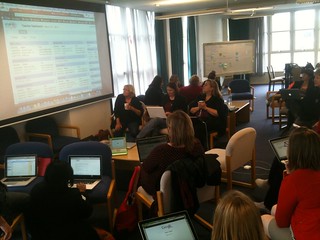
Counting down to #EduCampAKL tomorrow

The following post originally appeared on #edChatNZ Blog

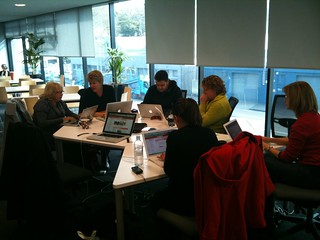
What motivates kiwi educators to spend 4-5 hours together, sometimes more when they travel, and on a Saturday?

Maybe the opportunity to share with like minded learners, mixed in with a bit of geeky stuff and a whole lot of networking and fun…essentials of an EduCampNZ event!


EduCamp in Auckland originated in 2008 as an unconference. Educators already connecting and sharing through blogs and Twitter, decided some kanohi ki te kanohi would definitely add value to their existing learning and sharing online.


The unconference model was a no-brainer as it seemed to reflect the serendipitous-ness of social networking. In comparison to traditional conferences, unconference is participant driven (whoever comes is the right people), sessions are scheduled on the day and the event itself is free.


In hindsight the strength of the online networking was also pivotal to initially spreading the word and continues to be a force in and around all EduCampNZ events.


While most EduCampNZ events include a focus on digital learning the programme is developed on the day by whoever is there. Sessions range from demos and hands on to lively conversations as well as an active backchannel sharing on Twitter and collaborative docs. Many events will also include participants contributing from a distance … you don’t have to be there, to be there.

As attendance is free, EduCampAKL events have been hosted through the generosity of local schools providing breakout spaces and wifi. All participants are encouraged to bring a digital device and be prepared to go with the flow! (unconference.net)

This year EducampAKL will be on Saturday 26th  July, thanks to the team at Western Heights School in Henderson and  principal +Ash Maindonald . Everyone is welcome and encouraged to connect now through the wiki and online.


In the past year over a dozen events have been organised locally and supported nationally around New Zealand. No two events are the same as they are inspired and realised through a desire of participants to share and learn in an open environment. 

If you are keen to attend or organise an event check out the EduCampNZ wiki and participation ideas. All content is available under Creative Commons

Plus some tips here for organising an unconference (via +Fiona Grant &  +Anne Kenneally

+Caroline Bush

Sunday, 2 December 2012

"Harnessing Your Ecosystems"

I wonder...is my use of social media purely a response to my professional exploits? If I didn't work as a teacher and facilitator would I Tweet?

I created my first wiki in September 2006 and over the following year joined Delicious and Flickr, began blogging and finally at 7:04pm on the 2nd August 2007, posted my first Tweet. There was no looking back. My purpose was to connect and share. At the time I was collaborating with an awesome cluster of five schools with over 80 teachers and email was just not going to cut it.

I quickly realised that Web2.0 was going to provide me with increasingly creative tools to communicate and collaborate and also accelerate my work flow substantially. What I hadn't predicted was the growth of a professional learning network that I rate as one of my most valued assets both professionally and personally. This is where I do some of my best learning and in this rapidly changing world learning for me is at its best when I can connect with like-minded.

I have blogged previously about growing a PLN with links and resources to get started. Investing time utilising social media to not only access resources but also contribute and change practice can be augmented by harnessing the power of a professional learning network.

Described as "the power of pull" by Hagel, Seely Brown and Davison (2010), new technologies are creating platforms that increase our visibility and can help us connect with more people, people that we don't know yet or may even be aware exist.

How are you "harnessing your ecosystems?" How are you scaling up your connectivity and attracting the people and resources you need to find your potential? (Blog Post 10/06/2012

If it's a question of time, this is worth the time. You are not alone out there and believe me every time I think I have a new idea or challenge I find I am not the first or the only one…thank goodness!

Sunday, 19 February 2012

Navigating New Networks

Navigating the Panmure Roundabout - click for a birdseye

It has been an exciting couple of weeks. Joining a new team, visiting new schools, new learning and giving my Google Maps App a daily workout navigating new routes...and the notorious Panmure Roundabout!

I'm thriving on the new learning opportunities as a result of growing my professional learning networks. Lots of learning for us all including 1:1 Netbooks, Google Apps for Education, Teacher Dashboard and some new Mac users too!


Below are some resources I have shared over the past week. Your recommendatiosns appreciated, use the blog comments to share more.

Thursday, 18 August 2011

Recommendations for building your PLN...where would you start?

I have had requests lately from educators looking to build their e-learning PLN and asking for recommendations on where to start. Rather than respond individually I have shared as a post.
Connected
This may be a bit of a brave new world for some so I have gone for less is more and what I hope provides a range of options (especially for those who may be starting out) to connect quickly through existing professional learning networks and communities.

Please comment if you have other recommendations that may be curriculum or subject specific.
  1. Twitter: there is a very strong group of New Zealand and international educators using Twitter. #edchatNZ - NZ Educators and OZ Educators on Twitter
    Useful tips for getting started on Twitter:
    Twitteraholics guide to tweets, hashtags and all things twitter
    The Ultimate Twitter Guidebook
    Using Twitter to build your PLN
  2. The Ultimate Guide to using Twitter in Education
  3.  Tweeting for Teachers: A new report published jointly by Pearson and NoTosh recommends that teachers should use Twitter, Facebook and other social media tools to improve their classroom skills.
  4. EduCampNZ Wiki: a series of e-learning un-conferences that provide a valuable opportunity to connect with like minded educators interested in e-learning and education. Explore the wiki to connect with other participating educators at each of the EduCampNZ events. 

  5. EdBlogNZ  has an online directory of blogs written by teachers and other professionals in New Zealand’s education space.  Use blog comments to connect with others who share your interests. 

  6. Online Groups and Communities:
  • Google Educator Group GEGs are independently run communities of educators who inspire and empower each other to meet the needs of our learners through technology, both in the classroom and beyond. 
  • The Virtual Learning Network (VLN):  A range of professional learning groups from early childhood through to tertiary.
  • Google Apps in NZ Schools Group:New Zealand schools keep you up to date with the latest news and technology available for Google Apps for Education
  • MLE Reference Group: Discuss the software and digital content that support learning in New Zealand schools. 

Sunday, 7 August 2011

"Fantastic turnout for #EduCampAKL" via @lenva

Teacher Dashboard
Posting to organise and record some of the excellent contributions from EduCampAKL yesterday. Ka nui te mihi to everyone who participated and contributed, you continue to inspire me.

Also thanks to our hosts @ClaireAmosNZ and the IT team from Epsom Girls Grammar who worked wonders with the network when around 80 of us (with multiple devices) descended for the Smackdown at 10am.

For those of you who like to take time and explore, the EduCampAKL wiki includes a multitude of links and resources shared on the day. I have also summarised and book marked contributions in My Delicious below.

Friday, 1 July 2011

EduCampNZ: Interface Magazine, July 2011

Click to view pdf.

Thanks to Interface Magazine for sharing EduCampNZ story in their latest issue.

Looking forward to EduCampTaiTokerau tomorrow, check the wiki for details or follow #EduCampTT


"EduCampWelly was about wanting to be there, it's self directed and personal"
@teachernz

Monday, 27 June 2011

Tāngo Whakaahua

 Tāngo Whakaahua– Creating a visual collaborative metaphor in response to our mārae noho through the medium of digital photography.


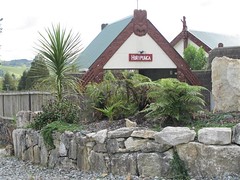
Motatau marae
Photo: Cheryl Harvey
Facilitators from Team Solutions had the privilege of staying at Motatau Mārae in April. Motatau is located in the far north of New Zealand approximately 3 hours drive from Auckland (View Google Map). The mārae was built in the 1920s  and, as we learned, has contributed significantly to the history of the area and New Zealand.

After the powhiri, that included a waiāta from Motatau Primary, many of us were drawn to the images that line the walls of the wharenui. They hinted at what we were to hear later that evening when we gathered for a more detailed history from local whanau.
Motatau Mārae was built in the 1920s  to honour 
Northern Maori Member of Parliament Tau Henarae 
Much of the history of Motatau Mārae is also recorded through significant carvings inside the wharenui. It was fascinating to learn about the connection Motatau has with the meeting house, Te Tiriti o Waitangi. Built in the grounds of the Treaty House at Waitangi, the meeting house commemorates the 100th anniversary of the signing of the Treaty of Waitangi.


The wood used for carvings for Te Tiriti o Waitangi was sourced from the forests around Motatau and were also initially carved at Motatau Mārae before being transported to Waitangi.
Digistore Learning Path: Te Tiriti o Waitangi


On the second day of our mārae noho facilitators were able to choose from a range of sessions, Te Ara Hikoitanga, opportunities to explore "Maori Achieving Education Success as Maori". 
  
Cheryl Harvey and I were invited to collaborate on a session and with our mutual interest in things digital we developed Tāngo Whakaahua. 

Our planning for the session has been shared on this Google doc. The link to the Google doc was shared with participants a few days before the Marae noho. This provided the group with an opportunity to think about their participation and responses before the actual workshop on the second day of our visit.

Anō te ataahua (a time to view creations and experiences from Te Ara Hikoitanga sessions) provided us with an opportunity to share our visual collaboration and also individual slide shows from each of the Tāngo Whakaahua participants.  I have uploaded our collaborative response below. Ka nui te mihi to facilitators who contributed and to tamariki from Motatau Primary School for the waiata.


Digistore Learning Path - Marae noho
I have also shared this learning path created to support further thinking and learning opportunities in response to the mārae noho. The learning path includes:
  • digital resources from Digistore and other digital collections
  • primary source analysis tools for students
  • online resources and support for Mārae noho
  • Te Tiriti o Waitangi - primary sources and links to further digital collections and historic articles and information.
Motatau Mārae taken using 360 Panorama app for iPhone (click to enlarge)

      Wednesday, 30 March 2011

      ...to the power of three...now four!


      For the past three years our professional learning networks have supported an e-learning un-conference in Auckland. Tagged EduCampNZ the success of our day of learning, links and laughs is truly down to the participation and energy of the educators who contribute before, during and after the actual event.

      Update...to the power of three  four!
      This year, thanks to enthusiastic participants in other regions, EduCampNZ will also be hosted in Wellington, Whangarei and Tauranga!

      EduCampWelly: Wellington College, Saturday 21st May
      EduCampTaiTokerau: Whangarei St. Francis Xavier Catholic School, 2nd July
      EduCampAKL: Epsom Girls Grammar, Saturday 6th August
      EduCampBOP: Tauranga School Support Services, Saturday 13 August 
       ...and then there were five!

       EduCampDunners: St Clair School, Dunedin, Saturday 27th August

      Participants are also using social media to share and collaborate. 
      • images and video from previous years
      • Twitter #tags for each venue
      • opportunities to connect with participants & share your interests  
      The focus is on e-learning and education, sharing ideas we've discovered and learning from each other. Everyone is invited to participate. The purpose of EduCampNZ is to both learn and contribute.

      "Go with the flow, follow your passion, take responsibility for your own learning" (unconfernece.net)

      Monday, 20 December 2010

      Snapshots of Learning

      Developing Digistore Learning Paths

      A focus of the Digi Advisor roll this year has been the further development of the snapshots for the Software for Learning website. While the snapshots are intended as a taster to the software and digital content – an indication of how one teacher has recognised the potential to support learning, we also wanted to make explicit the links to e-learning and effective pedagogy and explore how the snapshots might be utilised by leaders to support professional learning.

      Initially we reviewed the format of the snapshot to align with the teaching as inquiry cycle. While this provided us with consistency in both the format and framework for publication, the intention was to improve their potential as a catalyst for thinking and dialogue within our professional learning communities.  We considered the qualities of professional communities that promote teacher and student learning (Teacher Professional Learning and Development:BES. p.203) and have increasingly integrated the new snapshots into our online support and face-to-face facilitation to reinforce these.

      As an e-learning facilitator I have also used the snapshots with our e-learning cluster to explore how teachers in other schools are integrating e-learning and the implications for teaching and learning. Additionally the links to the teaching as inquiry cycle  provide a useful framework for teachers to inquire into their practice. The cycle provides common points of reference in relation to effective pedagogy and teacher actions. This can be useful to support dialogue as teachers in a professional community also have diverse learners and consequently may have identified different professional learning outcomes from those of their colleagues.


      Snapshots in the new format are continuing to be edited for the website and we would like to acknowledge and thank the teachers who have shared their teaching and their students' learning. Their collaboration on this project is both valued and appreciated. While the snapshots are accessible from the Software for Learning home page, links to the new snapshots have been saved as a group in the Software for Learning Delicious. Browse each of the snapshots using the arrow on the top right of the Delicious navigation bar. Teachers are invited to share their snapshots of learning, visit the wiki for details.

      Click to enlarge

      Wednesday, 8 December 2010

      Celebrating 50 Years of Teacher Education

      Howls of laughter today working with a teacher who is also a past T-Group buddy from our days at the Hamilton Teachers’ College.  Waikato's  Faculty of Education have been celebrating 50 years of teacher education and all our original photos have been posted on the Hamilton City Libraries website. We hadn't seen our T-Group photo since it was taken way back when!

      "The library is promoting digital storytelling to create a digital library of arts, cultural and heritage resources to help create a digital knowledge basket of Hamilton memories for future generations to enjoy and everyone is invited to join the fun..."

      ...and we did have some fun today, testing our memories and sharing stories from our student days. If you attended Waikato's School of Education (formerly the Hamilton Teachers’ College) search the archives for student teachers as far back as 1960...I found mine...a chocolate fish if you can identify me ;-) Click photo to zoom.

      Monday, 6 December 2010

      Geocaching

      Many thanks to Gerard and his students for inviting me to tag along last week on their Geocaching session at the Auckland Domain. Lots of learning and laughs, plus it was great to see Gerard's programme in action with the students.
      Find out more about Geocaching and the Key Competencies on Software for Learning.

      View on Flickr 

      Tuesday, 12 October 2010

      Crowd-sourcing...

      ...it might not work for everyone however crowd-sourcing, in the form of a 'Smackdown' has provided lots of learning and fun collaborations for us over the past couple of months. Back in June this year Dorothy, Rocky and I attended edubloggercon, an all-day unconference held before ISTE 2010. I was also on a bit of a recce for EduCampNZ where we included a Smackdown as a quick and effective way of connecting with people and ideas. Starting the day with this type of activity can be quite important for an un-conference, where the programme is developed on the day and there may be participants who are attending for the first time. We set up a Wallwisher and everyone was invited to contribute before, during and after EduCampNZ.


      This can be quite important for an un-conference, where the programme is developed on the day. 

      I was excited when Dorothy came up with the idea to try this out at uLearn10 this year even more so when I found out the theme was Apple Tools...a "sMACdown!"

      Get the flash player here: http://www.adobe.com/flashplayer

      The standard rules applied and this time Dorothy also created a GoogleSite and invited other Mac enthusiasts to contribute their tips to kick-off. A Wallwisher was posted for participants to add their tips and it was great to see how many were also added by people not attending the conference. We also tapped into Twitter using the conference hash tag #ulearn10 and #sMACdown

      The Smackdown concept has worked for us in both an un-conference and traditional conference setting and we have been able to adapt to suit the context and purpose. From the feedback received it also seems to have worked well for the 'crowd' who at the end of the day are the reason why these types of collaborations are valuable.

      If you participated or contributed...many thanks! The 'what the who and the how' can be accessed from the sMACdown Google site along with everyone's contributions.

      If you are planning a Smackdown please share it with us...the crowd will be ready and waiting!

      Wednesday, 28 July 2010

      Learning, Links and Laughs @ EduCampNZ

      "Go with the flow, follow your passion, take responsibility for your own learning"...three tips from unconfernece.net as we headed into our e-Learning un-conference, EduCampNZ, on Saturday 24th July.

      Hosted at Summerland School in West Auckland, over 70 inspirational educators participated and contributed to a day of learning, links and laughs. We kicked EduCampNZ off with SpeedGeeking. Using TwitterTime each participant had 140 seconds to introduce themselves and share what is currently on their radar.

      We also introduced a Smackdown to EduCampNZ this year after Dorothy, Rocky and I had participated in similar sessions at the ISTE conference last month. Both these sessions provided opportunities to connect with others and identify similar interests to pursue throughout the day.

      'Everything EduCampNZ' can be explored from our wiki including a shared Google Doc with links and contributions from participants, The Smackdown WallWisher, #EducampNZ Twitter stream and photos.

      We would also appreciate your suggestions and feedback to assist the organisation of future un-conference events. We are excited that educators in other regions are exploring the possibilities of running similar events and your recommendations would be valued. Feedback can be posted on the wiki.

      I want to again acknowledge the generosity of all participants... from the staff and students of Summerland Primary, to the educators who contributed especially those that travelled from beyond West Auckland... Arohanui.

      The following video is my attempt to capture some of the EduCampNZ highlights! Because it was shot on July 24, 2010 I have also submitted it to Life In A Day, a project documenting a single day on earth.


      Sunday, 12 July 2009

      "Inquire with a travelling mindset..."

      "Inquire with a travelling mindset"...an analogy used by Claire Sinnema while exploring teaching as inquiry with facilitators recently. Useful and timely messages from Claire in light of some of the confusion between teaching as inquiry and inquiry learning, that we have experienced as schools move towards implementing the New Zealand Curriculum (2007).

      Image Attribution: 'je dois apprendre aux curieux'


      More from Claire...

      The NZC(2007) describes some ways of thinking about teaching and learning using evidence based approaches, "the kinds of teaching approaches that consistently have a positive impact on student learning" (p.34) and also thinking about teaching as inquiry, a way of 'being' or the underlying attitudes that influence our practice.

      Focusing inquiry is about:
      • Prioritising what is most important: "Every 10 minutes matters"... image the impact on student learning if those 10 minutes every day of every week are added up over the years a student is at school.
      • Learner diversity
      • National and community curriculum aspirations
      • Information and data
      • Individual group needs
      The above can be informed by research however the value of a teacher's past practice should not be overlooked. What good are the approaches, principles and mechanisms in the research? Why inquire if we know what works?  

      "Because context matters... inquiry is important"

      Effective Pedagogy in Social Sciences: Tikanga ā Iwi: BES, Aitken and Sinnema (2008).

      "Approach Teaching as Inquiry as we would approach travelling to new places..."

      Claire left us with the following message inspired by Alain de Botton's, The Art of Travel...
      "To inquire with a travelling mindset!"
       

      From the book...

      “What, then, is a traveling mind-set? Receptivity might be said to be its chief characteristic. Receptive, we approach new places with humility. We carry with us no rigid ideas about what is or is not interesting. We irritate locals because we stand in traffic islands and narrow streets and admire what they take to be unremarkable small details. We risk getting run over because we are intrigued by the roof of a government building or an inscription on a wall. We find a supermarket or a hairdresser’s shop unusually fascinating. We dwell at length on the layout of a menu or the clothes of the presenters on the evening news. We are alive to the layers of history beneath the present and take notes and photographs. Home, by contrast, finds us more settled in our expectations. We feel assured that we have discovered everything interesting about our neighborhood, primarily by virtue of our having lived there a long time. It seems inconceivable that there could be anything new to find in a place where we have been living for a decade or more. We have become habituated and therefore blind to it.”
      Alain de Botton, The Art of Travel (2002)

      Image Attribution:'Atlas, it's time for your bath'

      Friday, 5 June 2009

      "Teaching as Inquiry"

      In my last post I explored the relevance of teachers developing the confidence to approach new technologies with an inquiring, open mind and learning about the technology within a context that is connected to their current classroom practice.

      Also for those who are considering how twitter might be useful in an educational setting...

      Sunday, 10 May 2009

      e-Learning and pedagogy

      I have been following Michael Wesch online, many of you may be familiar with the videos he has created with his students exploring the impact of new media on society and culture ( "The Machine is Us/ing us" and "A Vision of students today").

      While the ideas that they explore are significant, what also challenges me is thinking about Wesch's application of new media in his practice. See a previous post "There are no natives here" Again I would recommend that you invest some time and watch "A Portal to Media Literacy".

      Last week Wesch posted a link to some work created by one of his students Kevin Champion. I have watched this video a number of times since ( embedded below) and have enjoyed thinking about the concepts Champion explores around connectedness, the impact of new media and the breaking down of barriers in education that are now possible as a result.

      " In education, this is seen in the emphasis on cross-disciplinary, multicultural, holistic, and interdisciplinary studies. It becomes clear that no one discipline and no one perspective can provide all the answers. Over the last 50 years, this theoretical connectedness has been expressed in the physical world through media. Television, cell phones, and the internet have added both a new level of connectivity and new ways to connect." Kevin Champion

      What continues to capture my thinking is the question of how Champion's use of new media to explore, share and create his understandings, may have been supported by the teaching actions of Micahel Wesch? During repeat views of the video I have tried to identify links and examples that may reflect effective pedagogy in the NZC specifically e-learning and pedagogy (p. 36).

      This exercise has continued to extend and challenge my thinking around "the changing role of the teacher and also our understanding of elearning as a pedagogical practice"...and also what this might mean for how we use assessment to both provide feedback and inform future action.

      For me this has been a useful next step from 'A Portal to Media Literacy' and the concepts of what it means to be a teacher in this century. I plan to use this example to further explore the concept of e-learning as a pedagogical practice with colleagues.

      Many thanks to both Michael Wesch and Kevin Champion for their inspiration.

      Friday, 10 April 2009

      "Whoever comes is the right people"

      Last year an unconference was coordinated in Auckland by Suzie Vesper. You can listen to feedback from participants on the VoiceThread below. We have had a number of informal requests to repeat this get together or 'unconference' so have decided to hold it again on Saturday May9. The venue will be open from 10am -4pm and in the spirit of an unconference there is no registration, cost, or required time to attend.


      What is an unconference?
      We have set up a wiki page with more information here. You are invited to add your details to the wiki
      as it could be useful for people who are thinking of attending to have some idea of who might be there and areas of interest. There is no commitment as we are acknowledging the openspace rule... "Whoever comes is the right people".

      There will be updates on the wiki closer to the day. You can keep up-to-date by joining the wiki and clicking the 'notify me' tab at the top of the wiki page to set up notifications. There is also a hash tag in twitter you can follow by searching #may9 from Twitter. This will show you updates about the unconference and can also provide you with some idea of who might be attending and topics they are interested in exploring.

      The unconference is very much about giving and receiving, while I admit that there will probably be a few geeks there (not looking at anyone in particular... lol) this will be a valuable but relaxed opportunity for participants to learn. If you have been thinking about using some of these new technologies and have questions, this might very well be the place for you on #may9!


      Images from last year's unconference.

      Tuesday, 29 July 2008

      "There are no natives here"...

      ...so says Michael Wesch as he reflects on his use of technology to support learning. His experiences also highlight a key message in the New Zealand Curriculum...to explore new and different ways of teaching and learning. The reference to Prensky's (2001) Digital Natives, Digital Immigrants also challenge some of the assumptions that we might have around our use of technology and student learning.
      As a cluster we are constantly exploring the changing role of the teacher and also our understanding of elearning as a pedagogical practice. Concurrently, while we recognise some students may have grown up with the technology and are confident adopters, this may not always automatically transfer to purposeful use that can impact positively on their learning? To engage with the technology simply to entertain without appreciating how it can be harnessed to make a difference to learning and consequently actions that are 'significant' involve development of new understandings about the technology for both teachers and students..."there are no natives here".
      Michael Wesch explores these ideas and provides some useful frameworks, understandings and examples of a 21st Century teacher...well worth investing the time to listen and consider.


      Thanks to Jo McLeay for highlighting.
      More videos by Wesch and his students...Vision of Students Today, The Maching is Us/ing Us etc...

      Tuesday, 17 June 2008

      "It's on the wiki!"


      I seem to be 'saying' and 'seeing' this more and more lately (Rachel says it warrents a tshirt ...lol). But fair dues to the wiki...it has been an amazing environment to support learning, for me over the past 2 years as a facilitator, and I know if I was in a classroom full time it would be number 1 on my hit parade. The ability to organise and share is not only a great way to connect and support learning programmes but gives both freedom, speed and creativity to my work flow.

      Some featured wikis in our cluster include -Miss Gamby's wiki and Room12
      Felicity (yr 1-2)and Jo (yr 5-6) at Northcote Primary are using their class wikis to enable students to access online resources to support current classroom learning and share this with home. Sometimes it can be challenging for the younger students to navigate and these wikis are a useful way for teachers to organise resources and improve access for students.

      Charlotte and Nicola from Sunnybrae have used del.icio.us in a similar way to group learning objects for their senior students to access which has worked successfully. Rachel from Nelson Central has also simplified this for her 6 year olds by linking from individual graphics on their wiki to del.icio.us tags. Let me know if you have any other wiki solutions.

      Tuesday, 22 April 2008

      Transforming Learning with Tony Ryan


      Our day with Tony was about transformation through action. To first recognise and acknowledge that as teachers we matter and already do so much, so well. We are also learners and were challenged by Tony to explore strategies that not only strengthen our professional practice but also our heart and spirit...what actions inspire us every day? On reflection a couple of key messages included focussing our energies on "The Strength to Teach".


      Tony Ryan (2008)

      Also the importance of promoting thinking...the "capacity to think and create, and to enact solutions, will become the core survival skill in the next decade". An attitude shift here too in terms of how we respond to a problem. "Everyone is on a line from problem to solution" Tony reminds us. What makes the difference are our actions.
      Links and resources which have been generously shared by Tony can be accessed from the wiki
      Please share your reflections/highlights/thoughts by commenting below.

      Also it was wonderful to have the opportunity to farewell Margaret, Principal at Takapuna Primary and acknowledge her contribution to the cluster over the past 2 years. We wish Margaret all the best and thank her for all her support.

      Waiho i te toipoto, kaua i te toiroa